TL;DR: We've explored how AI and humans "know" differently; now, what if we radically sped up connection by sharing our AI-generated "Life Models" with new people? This piece imagines combining AI's deep analytical map of our inner world with a bit of real-world interaction to potentially leapfrog small talk and reach a deep level of understanding (maybe an 8/10?) much faster, while also considering the obvious risks.
We've talked about how my AI knows me (a solid 7/10 on the informational front) and how my wife Charlotte knows me (perhaps a 9.5 rooted in shared life). It highlights the different flavors of knowing – the analytical depth versus the experiential richness. But what if we could combine the best of both worlds to fundamentally change how we build connections?
This might sound like science fiction, but bear with me. What if you could meet someone new – a potential friend, collaborator, maybe even partner – and, instead of spending months or years slowly peeling back layers through awkward small talk and shared anecdotes, you could... well, share your "Life Model"?
Imagine handing someone the AI-synthesized map of your inner world, the kind of deep, structured self-awareness I'm building with AIs & Shine. This wouldn't just be your Myers-Briggs type or your Enneagram number. It would be a nuanced distillation of your history, your core values, your communication style (especially crucial for us neurodivergents), your triggers, your strengths, your growth areas, your operating principles, even the subtle patterns gleaned from biometric data like your Whoop strap.
Could sharing this incredibly detailed, vulnerable "map" – combined with just a little bit of real-world, shared experience – allow two strangers to leapfrog the initial stages and quickly achieve a deep level of understanding, maybe even reaching that elusive "8/10" on the relationship scale?
The AI Map: Providing the Schematics
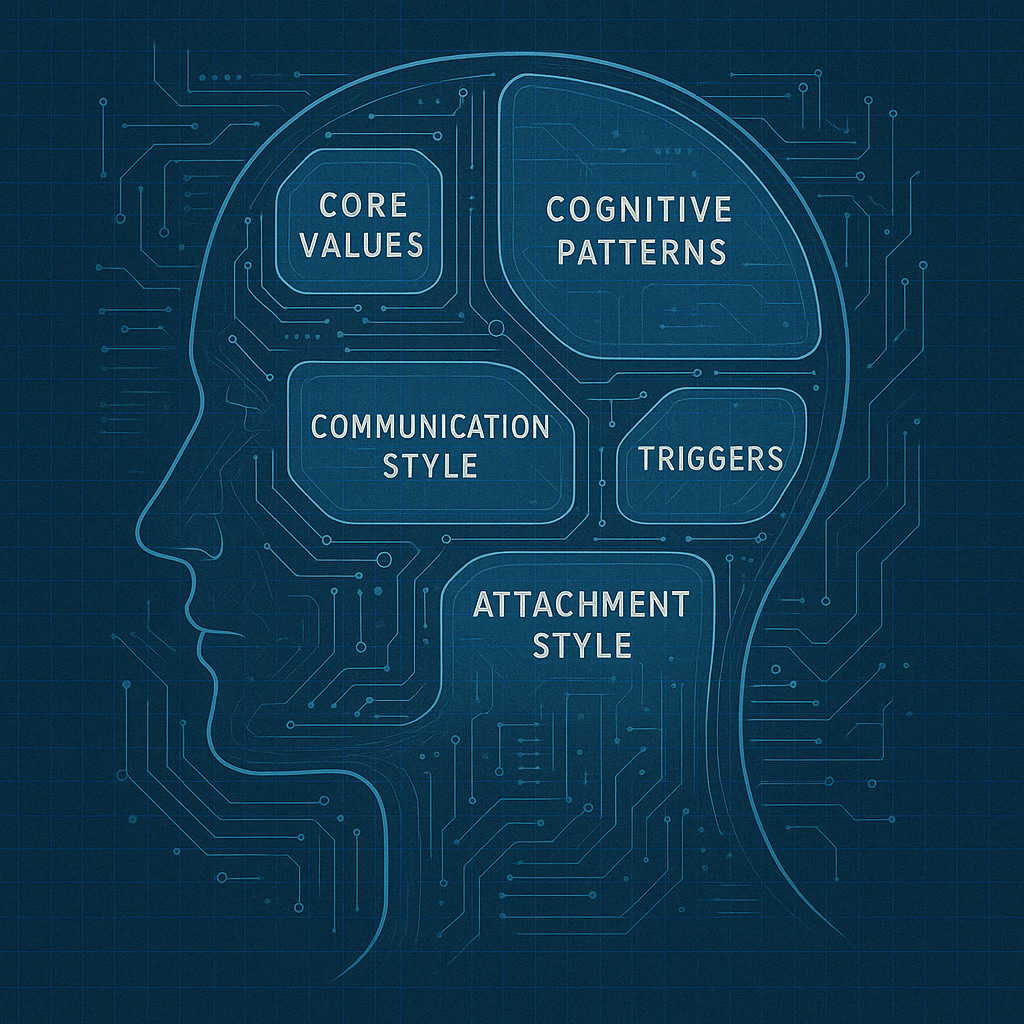
The power here lies in the AI's ability to synthesize complexity. Human self-reporting is notoriously unreliable; we forget things, we rationalize, we present curated versions of ourselves. And even with the best intentions, articulating the intricate web of our inner lives is incredibly difficult. My "Browser Tab Brain" is a perfect example – how do you explain that whirlwind to someone quickly?
An AI Life Model however, could potentially:
Offer Coherent Structure: Distill decades of experience and complex traits (like 2e paradoxes or TPD levels) into an understandable framework.
Highlight Key Dynamics: Identify core needs (like my Enneagram 5w4's drive for knowledge), attachment patterns, or communication pitfalls before they cause friction.
Provide Context: Explain why certain behaviors occur, linking them back to underlying neurotype, history, or values.
Sharing this map would be an act of radical vulnerability, offering immediate access to layers that usually take significant time and trust to uncover. It’s like giving someone the advanced schematics to your operating system.
Shared Experience: Walking the Territory

But here’s the critical part: the map is useless without walking the territory. Data points don't capture the warmth of a shared laugh, the spark of intellectual sparring, or the feeling of mutual support during a tough moment. That "little bit of shared experience" the prompt mentioned is essential. It:
Validates the Map: Confirms (or sometimes, interestingly, contradicts) the AI's analysis with real-world observation.
Adds Emotional Resonance: Connects the abstract data points to felt experience and intuition.
Builds Trust: Creates the human bond necessary for true intimacy, moving beyond mere informational exchange.
Seeing how someone navigates a simple coffee chat, collaborates on a small task, or reacts spontaneously provides irreplaceable context. It’s the difference between reading about Italy and actually being amongst the crowds at the Pantheon.
The 8/10 Potential: Accelerated Understanding?
The hypothesis, then, is that combining the AI-generated map with even limited real-world interaction could create a powerful synergy. You'd have both the deep, structured understanding and the initial felt sense of the person. This could potentially:
Increase Relational Efficiency: Quickly identify compatible connections and bypass relationships doomed by fundamental mismatches.
Deepen Conversations Faster: Move beyond surface-level topics to discuss core values and dynamics much earlier.
Aid Neurodivergent Connection: Provide explicit information that might otherwise be missed or misinterpreted due to differences in social communication styles.
Fuel Collective Growth: Imagine teams or communities forming based on this level of rapid, deep understanding – a potential accelerator for the "consciousness revolution" I envision.
The Risks in the Code
Of course, this isn't without risks. Information overload is real. Could seeing someone's flaws or triggers laid bare upfront lead to premature judgment? How do we ensure the AI models themselves aren't biased? What about the ethics of sharing such deeply personal data? And does bypassing the slow, organic process of discovery rob relationships of a certain magic? These are crucial questions we need to grapple with, especially as we build tools like AIs & Shine.
A Future of Intentional Connection?
Despite the risks, the potential excites me. In a world that often feels increasingly disconnected, could AI offer us tools not just for productivity, but for fostering deeper, more authentic, and more intentional human connection, faster? Could sharing our AI-generated maps help us truly see each other sooner, allowing us to spend less time guessing and more time genuinely relating?
It's a radical thought, but maybe, just maybe, hitting an 8/10 quickly isn't about hacking intimacy, but about unlocking a more efficient path to authentic understanding.
What's your take? Would you share your "Life Model" with someone new? Does this idea excite you or scare you? Let me know your thoughts.